Does the timing of topping and the length of topping the necks of onion
bulbs affect bacterial bulb rot?
Yes!
- Both the timing of topping the necks of onion bulbs and the length to which the necks are
topped can have big impacts on the risk of bacterial bulb rot.
Soilborne bacteria that get into the necks of onion plants (e.g., from splashing water) can multiply and infect the necks only while there is still moisture in the neck tissue (necks are still green) and the tissues are senescing or wounded. When the tops fall over as onion bulbs mature, the neck tissue becomes highly susceptible to pathogenic bacteria and fungi. The necks take a while to senesce and dry fully, resulting in a ‘window’ of high risk for bacterial infection while the necks are still green and not completely cured, as bacteria can multiply and move down the senescing necks into the bulbs. In addition, topping wounds the necks, and bacteria are introduced readily onto the wounds from soil disturbed during manual or mechanical topping. The shorter the necks are topped, the less distance bacteria introduced onto the wounds have to reach the bulb before the neck tissue dries completely. If bulbs with green necks are topped with a longer neck, the necks might have time to dry completely before bacteria can move all the way down the necks to the bulbs. If bulbs are topped when the necks are completely dry, the necks can be cut short without increasing the risk of bacterial bulb rot.
Here’s how you can manage the timing and length of topping onion bulbs to reduce the risk of bacterial bulb rot:
- Cut the tops after they have fallen over and are completely dry! The single most impactful thing you can do with topping to limit bacterial diseases is to top after all the tops have fallen over and dried completely1,2. Without moisture in the necks, bacteria cannot multiply and move down the necks into the bulbs.
- If you need to top before the necks have dried completely, leave longer necks! Research in the Vidalia region of Georgia showed that leaving necks at least 2 inches (5 cm) long if they are topped before the necks have completely cured reduced the percentage of bulbs with internal bacterial rot by more than 50%3,4.
- Win the rot race! In summary, you can adjust the timing and length of topping onion bulbs to win the rot race either by topping after necks have cured fully, or cutting longer necks if they are not completely cured so bacteria have a longer distance to the bulb (finish line).
Select research trial results from the Stop the Rot Project on the timing of topping and the length of topping the necks of onion bulbs:

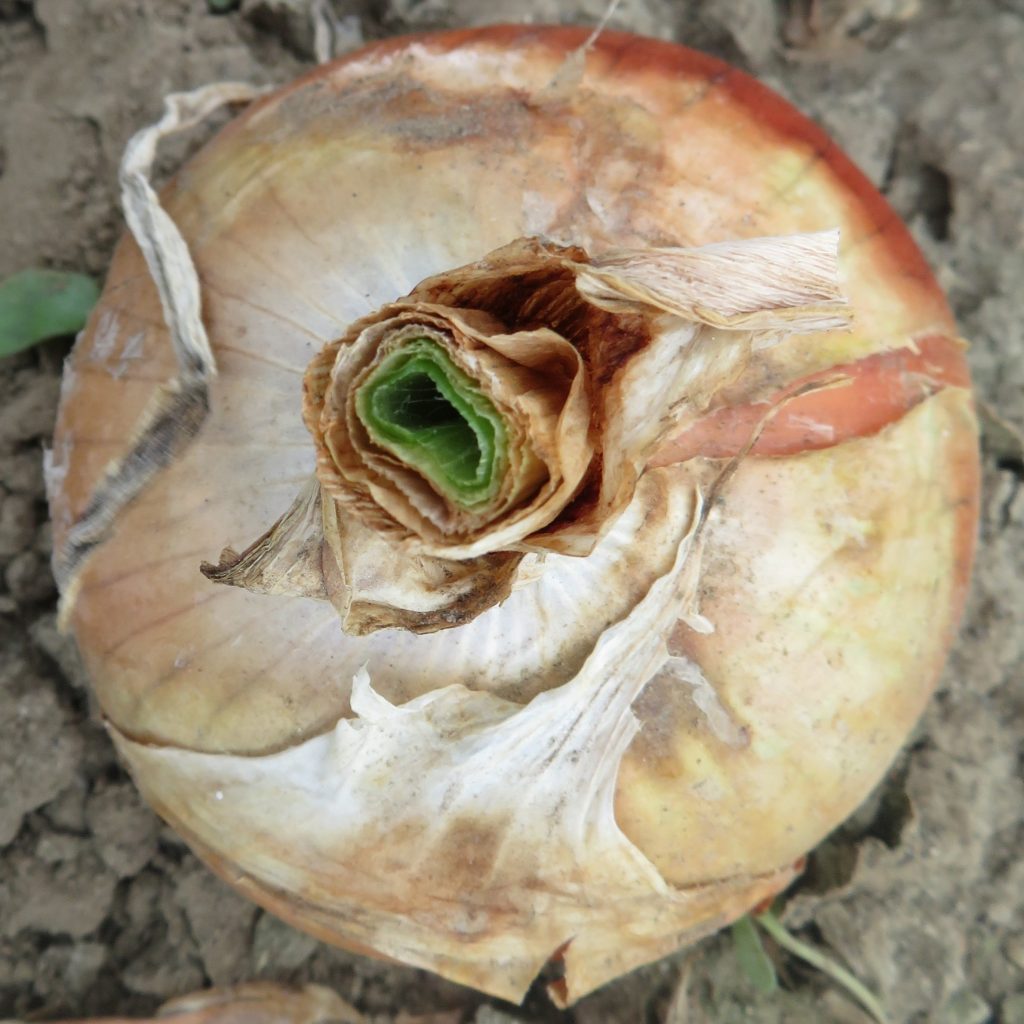

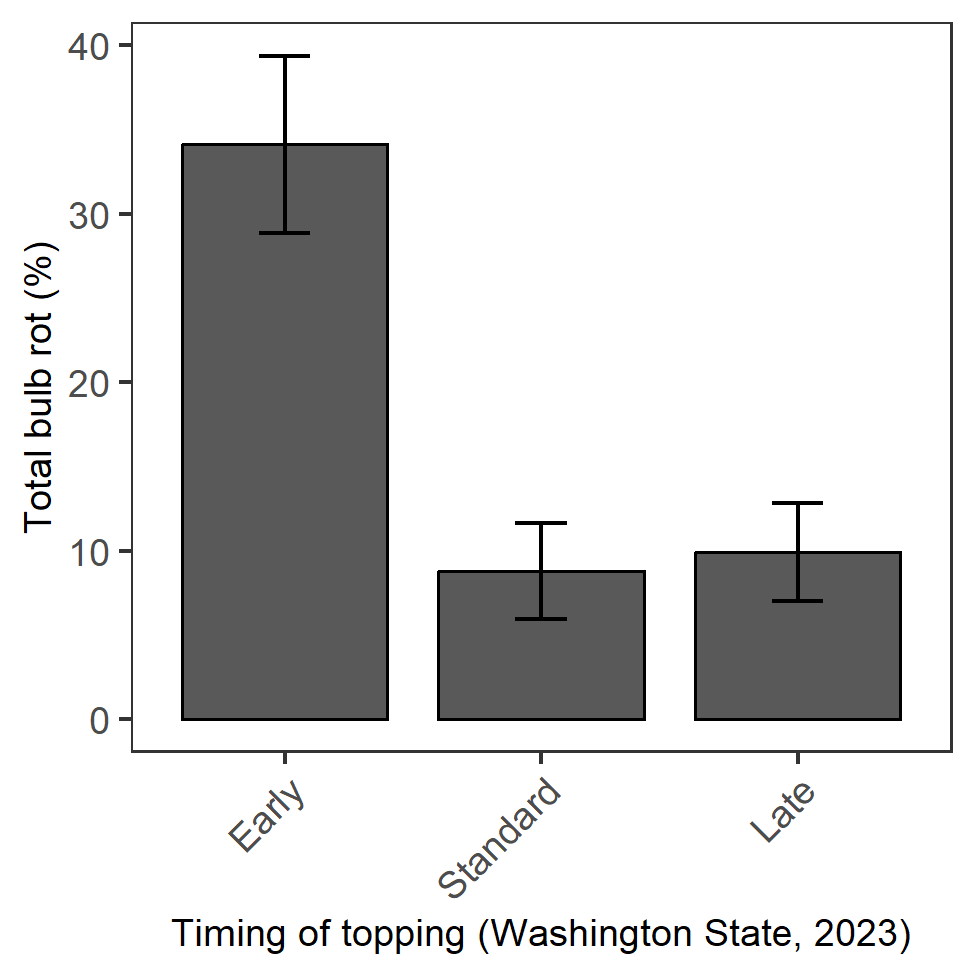
Figure 1: Impact of the timing of topping onion bulbs in a field trial in the Columbia Basin of Washington State in 2023 on the incidence of bacterial bulb rot. For onions grown under center pivot irrigation and topped early (11 Aug., average 91% neck moisture), standard (25 Aug., 60% moisture), or late (12 Sep., 18% moisture), an average of 34 ± 5%, 9 ± 3%, and 10 ± 3% of the bulbs developed bacterial rot, respectively (at harvest + after 5 months in storage). Data were averaged across five replications of inoculated and non-inoculated plots for each timing treatment.

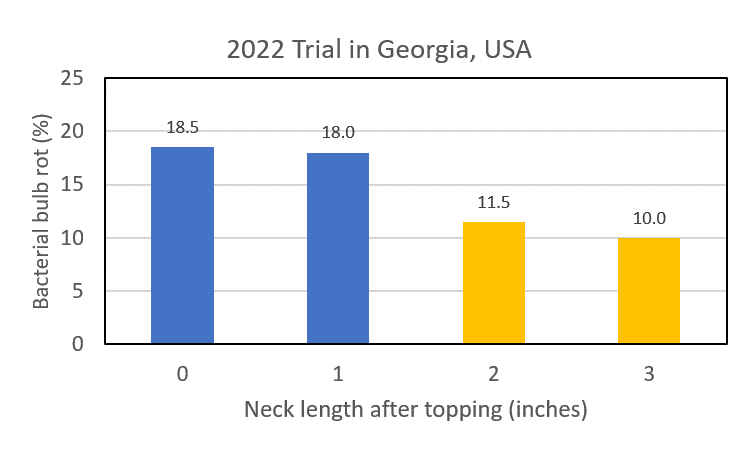
Figure 2: Effect of the length of necks after topping sweet onion bulbs on the incidence of internal bacterial bulb rot in two seasons in Vidalia, Georgia (Dutta and Tyson 2022, Dutta et al. 2023).
Authors
Lindsey du Toit and Tim Waters, Washington State University; Christy Hoepting, Cornell AgriLife Extension; Bhabesh Dutta, University of Georgia.
Recommended format for citing this document: du Toit, L. J., Waters, T. D., Hoepting, C., and Dutta, B. 2025. Frequently asked question: Does the timing of topping and the length of topping the necks of onion bulbs affect bacterial bulb rot? https://alliumnet.com/frequently-asked-questions/
This work is supported by the Specialty Crops Research Initiative project 2022-51181-30013 (Stop the rot: Combating onion bacterial diseases with pathogenomic tools and enhanced management strategies) from the USDA National Institute of Food and Agriculture. Opinions, findings, conclusions, or recommendations in this publication are those of the authors and should not be construed to represent any official USDA or U.S. Government determination or policy.

Citations:
1 du Toit et al. 2022. Effects of late-season cultural practices on bacterial leaf blight and bulb rot in an onion crop, Pasco, WA. 2021-22. Plant Disease Management Reports 16:V149.
2 du Toit et al. 2023. Effects of time of topping on bacterial leaf blight and bulb rot in an onion crop in Pasco, WA, 2022-23. Plant Disease Management Reports 17:V125.
3 Dutta, B., and Tyson, C. 2022. Evaluation of neck-clipping length on post-harvest incidence of external and internal bacterial bulb rot in onion, Georgia 2021. Plant Disease Management Reports 16:V107.
4 Dutta, B., Greene, R., and Tyson, C. 2023. Evaluation of neck-clipping length on post-harvest incidence of external and internal bacterial bulb rot in onion, Georgia 2022. Plant Disease Management Reports 17:V008.